
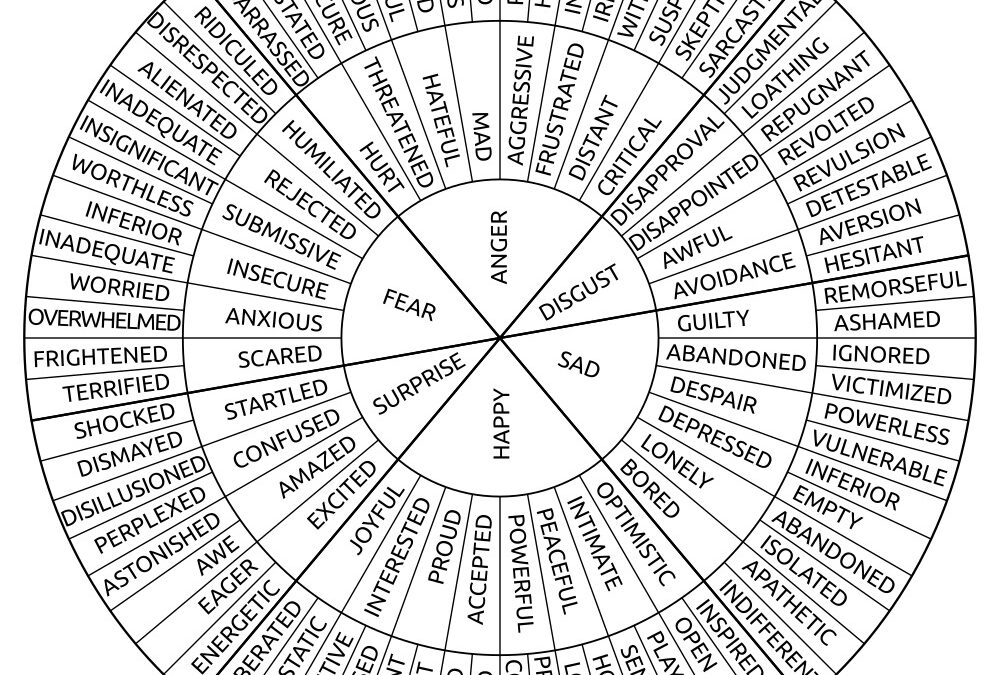
In therapy, I (and almost every other therapist) emphasize the role of emotions. But why?
In sessions, I try my damnedest not to ask the often-mocked, smarmy, clichéd question, “How does that make you feel?” Aside from being a stupid question, it overly simplifies emotions and makes a host of unwarranted assumptions. But no ranting on that now—the question was, why emphasize emotions?
I’m not about to say anything novel. The answer is because they are relevant and de-emphasized or ignored (at least for men), often to the point of becoming detrimental to the lives we want to live. This is a case of needing to call men on their bullshit: that is, they are obviously avoiding emotional awareness and processing because they have no clue what to do.
I see men who come in in some manner of distress. And often, when the discussion naturally leads to emotional awareness, a common comment is that emotions are “not important” and “shouldn’t govern the way I live.” Or, “I just want to be rational about all this!” Ok, maybe emotions shouldn’t take a primary governing role over us, particularly some like anger; and rational thinking can be extremely helpful to our overall well-being.
BUT my somewhat smart-ass response is to point out that if emotions are not important, why the hell are you sitting across from me talking about some dissatisfaction in your life?!
Distress, dissatisfaction, anxiety, depression, and all the other clinical diagnostic labels we put to our situations are ways of specifying unpleasant emotional states. If emotions weren’t important (or impactful), then I would be out of a job.
And for a historical perspective, bear in mind that prior to the Enlightenment, emotions were often given center stage—it’s recent that they are so de-emphasized and considered ancillary, even a nuisance, and counter to what is important (efficiency/productivity). BUT emotions are important. And UNDENIABLY, they are a part of life just as our actions and thoughts are. Some very smart people would argue they are the most important:
“Reason is, and ought only to be, the slave of the passions, and can never pretend to any other office than to serve and obey them.”
—David Hume, A Treatise of Human Nature (1739–40)
So the dead horse I’m beating in this post is to not push emotions aside or de-emphasize them, but to be aware of them, process them thereby acknowledging them for what they are; a crucial aspect of our human experience. And we’re foolish to pretend otherwise.
My take is that the behavioral and intellectual aspects of life have been culturally emphasized while the emotions have been abandoned, at least externally. It’s hard to argue that they have less impact internally, as depression and anxiety rates continue to climb in this country. There’s also the flip side, where “vulnerability” has become an over reactive buzzword for men. As in most things, there is nuance and balance. The problem is that most men are too damned “busy” to take the time for self-reflection and self-understanding. So things then become caveman simple, binary: emotion good, emotion bad (the very blunt center of the feeling wheel). Take a moment to expand your perspective and look outward on the wheel. We’ve unfortunately adapted to our lack of understanding. It’s important to stop being ignorant and assume responsibility for all aspects of our lives.
Again, three core aspects compose any experience in life: the Intellectual, the Emotional, the Behavioral. They are not separate or separable—they are experience.
What do we THINK about it? What do we DO about it? How do we FEEL about it?
Let’s imagine if you were to de-emphasize the intellectual aspect of life. What would that look like? You may act in ways that don’t take into account future consequences of behaviors. You just act on your emotions alone. This most likely would not lead to your best possible life. And alternatively, if you only focused on the behavioral aspect of life, what reason would there be for doing anything other than hedonistically eating and sleeping and fucking?
As individuals, we cannot take all the blame. After all, what did you learn in school? How and what to think and how to behave. Where did you learn to feel?
But often, when men do try to understand themselves and engage in philosophical insight, they are invariably hit by the current freight train that pretends to be stoicism. In the performative attempt to audience-capture, snippets and summary points of an over-simplified, bastardized version of a great philosophical lineage are dumbed down and fed to us as easily digestible, repeatable mantras. Memento mori, anyone? Time to swipe closed TikTok and open a book. Develop emotional awareness. Then go out in the world and practice.
Without emotion, we become the automatons, the very cogs in a wheel that we rail against every morning when we rise seeking a better way of being. It’s in front of us; we just need to learn more about ourselves.