
I’m all for having systems in place to avoid situational decision-making. This can be quite a helpful method for adopting wanted behaviors. Do you want to eat healthier? Envision yourself as someone who eats healthy—adopt that as a system so when you’re standing in line to order, you systematically look for the healthiest option. Want to exercise routinely? How would a routine exerciser act? Do that. But systematizing and pre-planning in general can offer a bad avoidance of having to use discernment. It’s important we keep the skill of decision-making.
It’s no hidden message that I despise much of our current lionizing of systems that increase efficiency and productivity. And here I have a new, nuanced irritation: that we’re inherently decreasing our use of discernment.
By giving up discernment—or more generally, decision-making processes—we sidestep the how-did-I-get-to-this-point-of-making-a-decision step. We don’t need to consider the how-to; we just need to focus on what offers more efficiency, leading to more productivity and ease. Neat and tidy, huh? But what happens with any skill that is not used? It atrophies. And that’s the concern here. By applying the framework of efficiency to everything we can think of, we’re neglecting the ability to discern this from that. I get it. We live in this world with responsibilities and obligations, and do require some efficiency, as productivity allows us to accomplish what we feel we need to, and ease is not inherently a bad thing. We don’t need to get all Sisyphus-ian.
But two problems arise by avoiding discernment:
1) We lose the faculty of processing toward an outcome.
2) We lose the ability to spot potential choices.
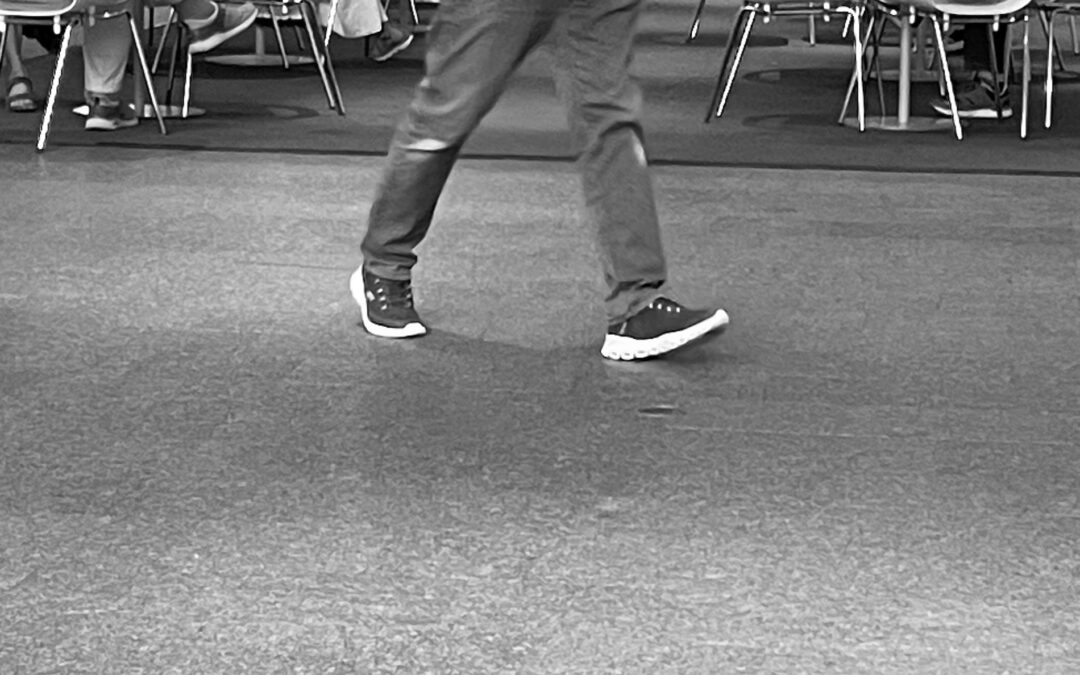
The world is grey, and we’re trying to make it black and white. Why? On a surface level, it creates ease, but comfort and ease are not always the point. Just because you can buy a pair of Skechers shoes that are easy because you can slide them on without bending over or otherwise figuring out how to touch your shoe, doesn’t mean you should. And on an existential level, easing life through systematizing ignores reality and what is. There is grey, we do have constant options, with choices to make, and sometimes meaning matters more efficiency.
While productivity is the tangible aspect of efficiency, ease is the emotional, feel-good aspect. On the flip side, effort is the tangible aspect of discernment, and meaning is the emotional. *Ironically, we need to use discernment in our determination of which is more important for any given option.
Another point: I’m assuming discernment is worthwhile. Why? Short answer is that it allows meaning in life.
Meaning is not gained from efficiency—remember, productivity and ease are. Meaning is derived from consideration and thoughtful application of who you are as a person, arrived at via being discerning. I guess we haven’t offered a definition of discernment yet, but we’ve cobbled one together already: It’s an intentional, effortful application of who you were, are, and want to be.
So let’s take some time to consider where a distinction between efficiency and discernment makes sense. When faced with options, do we choose efficiency or meaning? Where to start? Perhaps I’d suggest focusing on areas of our lives where we want meaning. You have stopped to consider these, right? These are the areas where we can say to ourselves, “Yep, it’s not all about what’s the easiest here.” What we’re doing is prioritizing something other than our own short-lived ease and what’s become the default method of trying to save time.
To add further guidance, asking the questions: what has lasting impact, cumulative effect, or is not easily reversible? These are a few considerations of what goes into meaning.
Back to our Skechers. At first glance, the ease may seem entirely justified. BUT what is the impact of the cumulative effect of not actively moving your body in space, and is that reversible?
Considerations of this sort are abundant, so here’s an idea: use all that time you’re saving by being efficient and allot it to considering what is meaningful. Otherwise, the point of being efficient seems to be being more efficient. Hey, Sisyphus, good thing you have those Skechers to cover all that ground walking in circles.