
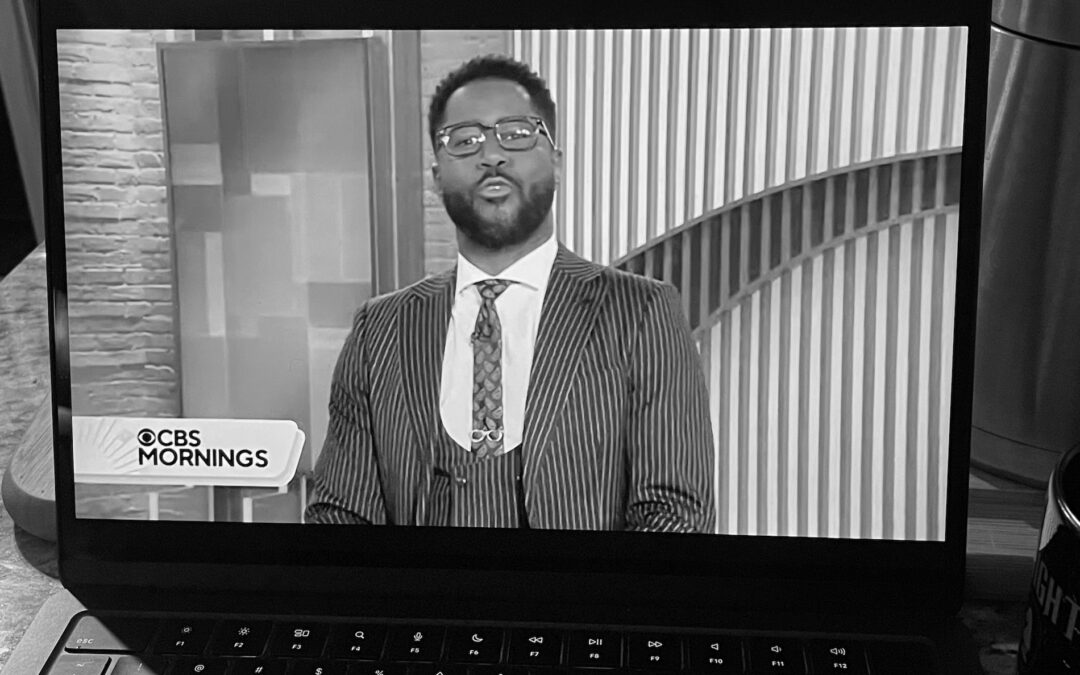
This dude must be the most appreciative man in the world. I mean, he NEVER misses an opportunity to acknowledge his gratitude. About everything. To everyone. All the time.
So what’s my problem with appreciation? Nothing. Appreciation is an admirable, self-reflective position. And practically, it serves an important human-to-human transactional factor. B.F. Skinner, in Beyond Freedom and Dignity, notes:
“Appreciation is significant: to appreciate the behavior of a man is to put a price on it. Esteem and respect are related terms.”
“I appreciate ya’.” This I have a problem with.
There is something odd about where the focus is placed. If by appreciate we mean to sincerely, kindly regard another person (or their behavior), it should be the “ya” (or, less millennial-ese, “you”) that is the focus. But instead we’re misdirected to the “I.” This expression is signaling more about the appreciator than the appreciatee. The signal should be highlighting the speaker’s kind regard for the other person, not somehow boasting the speaker’s position as more important (or even an equivalent position) by making it known that he is performing an act of kind-regard recognition.
Fuck that speaker. What he’s doing is prioritizing himself and therefore degrading the person who is to be prioritized.
You can chalk this gripe up as a mere pet peeve, but as I was brushing up on Sartre’s takes on psychotherapy, it struck me why this sentiment is more deeply problematic (and irritating as shit to me). For Sartre, self-deception is a form of bad-faith. And specifically, he sees sincerity as a form of deception—or more specifically, the explicit admission of one’s sincerity. When we utter the phrase “I appreciate you,” we are conveying our sense of sincerity, and this sincerity appears as honesty. But it is an honesty that circularly points to itself as being honest, in a “hey, look at me—look what I’m doing” kind of way. And it does this by using the kind regard for another person as a mask. How rude!
What’s perhaps worse is the ambiguity of this appreciation.
This is where the “ya’” really shines. By witnessing a signing-off from an interchange between two people with the “appreciate ya’,” we’re initially struck with a warm, fuzzy feeling that these two are simpatico. But there’s a glaring question that leaves this feeling hollow: appreciate ya’ for what? Dammit, there needs to be a specifier. This unspecified regard for the other leaves us grasping for a branch from which to hang the honesty sentiment.
Give me something other than you putting on public display your bad-faith.
At least offer the detailed mask of regarding the other person for their time, their thoughts, or their eloquence in avoiding questions—something that is not about you!
Left with only ambiguity, we can perhaps conjecture that Nate’s appreciation is for the other person wearing a tasteful suit, therefore allowing him to be the style iconoclast he, often blindingly, strives to be (I really should not have used the black & white filter for this blog pic).
It’s, of course, an easy enough leap to see how this appreciate ya’ sentiment is a manifestation of the self-entitled, self-important current culture. But let us not despair and go too far down that road; I have a solution: offer thanks.
“Thank you.” It’s as simple as that. By choosing this phrase, you are signaling your kind regard for the other person—and that’s it. I get there may be the discomfort of not having brought yourself into consideration, but maybe it’s time to leave ourselves out—at least some of the time.
And this solution has the benefit of being easy. Instead of three words, we only have to utter two, perhaps appealing to the laziness that also seems pervasive in current culture. In practice, it would be weird to say “I thank you.” So behaviorally, we eliminate any tendency to regard ourselves when regarding someone else.